by Adedolapo Alabi
A Harvest Season Gone Wrong
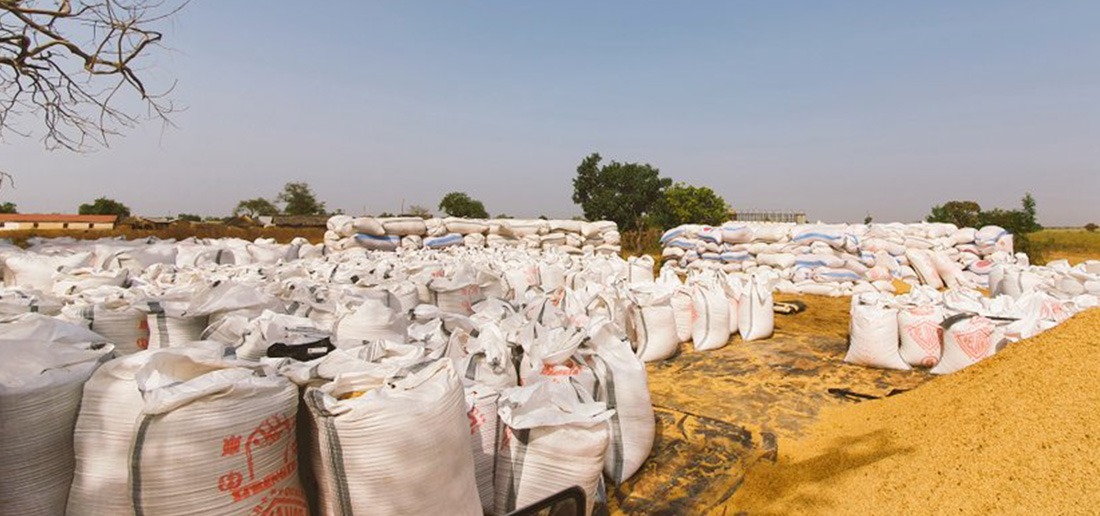
In late November 2020, I travelled to Yagaba in the North-East Region of Ghana to harvest rice on a farm I had invested my savings in. What should have been a two-day trip stretched into a week as we struggled to secure a combine harvester. With each passing day, labour costs were increasing and reducing our profits. By the time we finally harvested about 70 per cent of the farm, I accepted the 30 per cent loss because every extra day was costing money. Around the same period, many farmers and harvester operators left the rice fields to return to their respective polling stations for Ghana’s presidential elections.
A week later, I heard that cattle had been driven through the fields while we were away. Crops had been destroyed. Some farmers lost entire harvests, the result of months of labour and investment — almost overnight. I still remember the tension that followed. Farmers gathered in frustration, but local authorities stepped in to calm the situation before it escalated further. Some farmers discussed taking the matter to court. However, concerns were raised about the time, costs, and uncertainty involved. Eventually, traditional authorities brought both sides together and brokered a compensation agreement. At the time, I walked away treating it as an expensive, painful lesson in agribusiness. Years later, I found myself looking back on that experience from a different perspective: not simply as a costly farming lesson, but as an example of how accessible justice can prevent conflict from escalating. Farmers were angry. Livelihoods had been affected. All the ingredients for a much larger conflict were there. Yet the issue did not spiral into prolonged conflict. Instead, it was successfully resolved through mechanisms that people trusted and could access. We often think of justice as courts, laws, and institutions. Yet for many people, justice is experienced less as a system and more as a service: a way of resolving disputes, protecting livelihoods, and preventing everyday problems from becoming larger conflicts.
The Cost of Unresolved Grievances
What happened in Yagaba is not unique; it reflects a broader challenge that affects many communities across West Africa. Disputes over land, grazing routes, and livelihoods play out across the region every day, often with far-reaching consequences. Between 2010 and 2021, similar conflicts resulted in more than 15,000 deaths across Ghana, Nigeria, Mali, Cameroon, and Chad. Disagreements over land and livelihoods are inevitable, particularly as climate pressures mount. What matters is whether people have a trusted way to resolve them before frustrations boil over. In Yagaba, a destroyed harvest means more than lost crops. It means lost income, increased debt, missed opportunities for the next planting season, and long-term uncertainty for entire households. When disputes remain unresolved, the consequences can extend far beyond the individuals directly involved. Tensions deepen and insecurity spreads across communities, disrupting livelihoods. What begins as a local grievance can contribute to wider patterns of instability.
These effects are visible at a much larger scale. According to the 2026 Global Report on Food Crises, more than 80 per cent of people facing acute food insecurity live in contexts experiencing prolonged crises, with conflict and instability acting as the primary drivers. While food insecurity has many causes, the data highlights a broader point: when local disputes are left unresolved and grievances go unaddressed, instability can spread and weaken the conditions people need to work, produce food, and support their families.
Justice Beyond Courtrooms
My experience in Yagaba also raises an important question: what would have happened if everyone involved needed to rely entirely on formal justice processes? How long would it take? How much would it cost? What language would the proceedings be in? How quickly could a decision have been reached for people whose livelihoods depend on planting cycles, where missing a planting season can mean losing a year’s income? These questions matter because, for many people, formal courts are not the first place they turn when problems arise. Research by the Hague Institute for Innovation of Law (HiiL) shows that a vast majority of people facing legal problems never access formal courts.
This is not an argument against formal institutions. Courts and legal systems remain essential. But for many people, justice is first experienced through local leaders, community structures, and other informal mechanisms that are accessible, familiar, and trusted. The challenge is to design justice systems around people’s realities rather than expecting people to adapt to systems that remain inaccessible.
Why Justice Matters
For years, I thought of Yagaba primarily as a difficult farming experience and a costly investment lesson. What I appreciate now is that it was also a lesson in justice. The resolution did not come from a distant courtroom. It came from trusted local actors who understood the context, brought people together, and helped prevent tensions from escalating further. Attending Justice Matters reminded me that justice matters most when it is accessible, trusted, and responsive to the realities of people’s lives. It made me realise that what happened in Yagaba was an example of justice working exactly as people needed it to.
We often treat justice as a luxury, one that follows stability and development. Yet experiences like Yagaba suggest the relationship may work the other way around. When people have fair and trusted ways to resolve problems, they are better able to protect their livelihoods, plan for the future, and live with dignity. Justice, in that sense, is not only an institution, but a foundation on which everyday life depends.