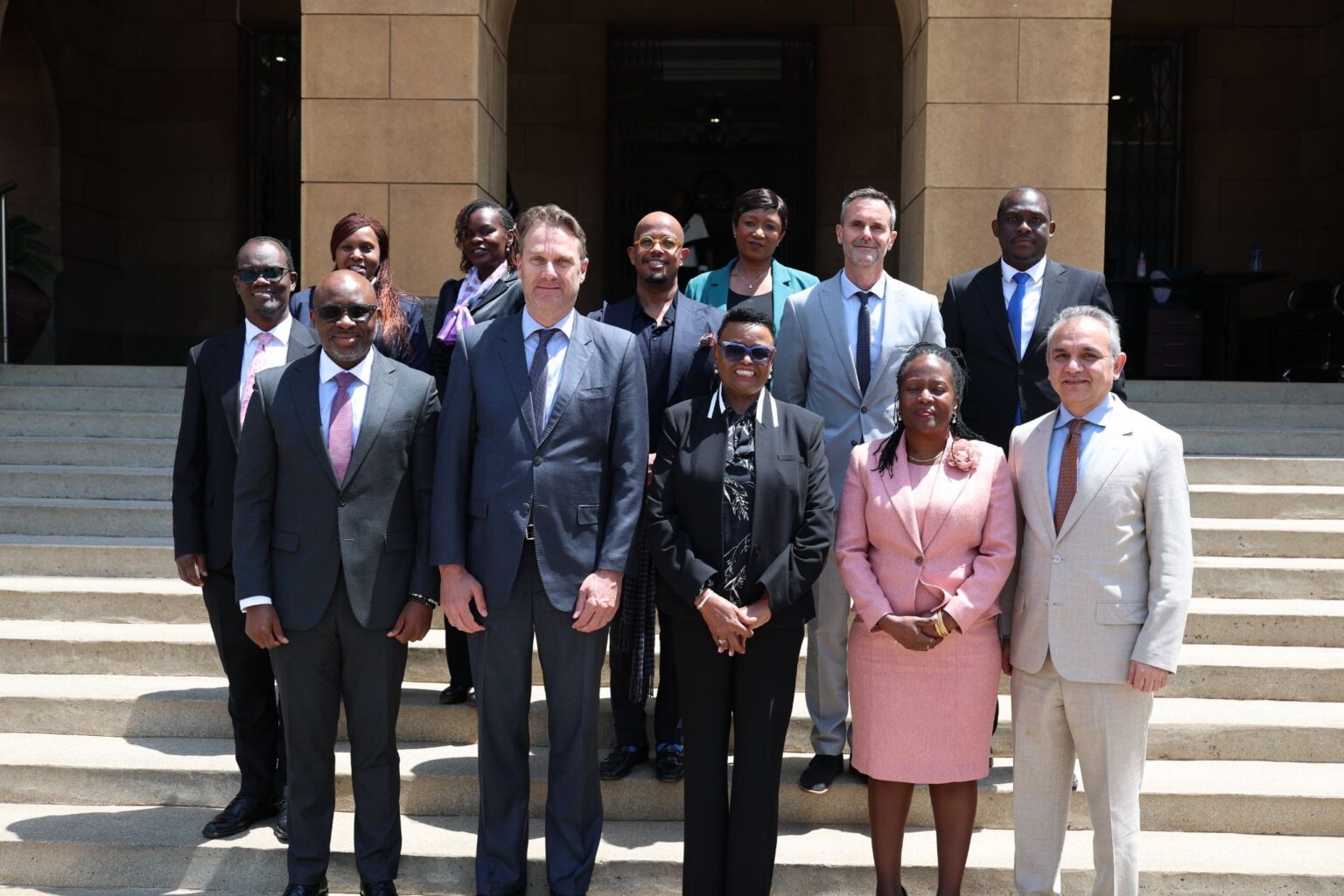
Nairobi, 10 August 2026 – HiiL and the Judiciary of Kenya have formalised a longstanding partnership to advance people-centred justice, signing a Memorandum of Understanding (MoU) today at the Supreme Court Building in Nairobi.
The agreement brings the two institutions together around a shared ambition: to make justice more accessible, responsive and effective for people by putting their needs at the centre of justice delivery. The signing formed part of the formal launch of the Kingdom of the Netherlands and Kenya Judiciary Partnership, with the Netherlands Embassy and the International Development Law Organization (IDLO) also participating in the ceremony. The MoU builds on years of collaboration between HiiL and the Kenyan Judiciary, including work supporting Kenya’s Social Transformation through Access to Justice Blueprint (STAJ). It provides a framework for taking that collaboration further, putting people’s justice needs and experiences at the centre of how justice is designed and delivered.
From justice systems to justice that works
People-centred justice starts with a straightforward question: does justice actually solve the problems people face? For someone trying to resolve a land dispute, secure child support, recover an unpaid debt or protect an inheritance, justice is not an abstract principle. It is whether their problem is resolved fairly, affordably and in time for them to move forward with their lives. Kenya has already taken important steps in this direction. Its justice system brings together multiple pathways for resolving disputes, from formal courts and alternative dispute resolution to traditional justice mechanisms. The Judiciary has also introduced innovations such as Small Claims Courts and mobile courts, helping bring justice closer to the communities it serves.
The partnership with HiiL builds on this foundation. It seeks to connect the strengths of the wider justice ecosystem, including courts and government institutions, civil society, communities, innovators and the private sector, so that different actors can contribute to solving people’s justice problems. The next step is not simply to develop more innovations, but to create the conditions in which solutions grounded in people’s everyday realities can take root, reach more people and endure.
Transforming justice is a collective endeavour
For HiiL CEO Udo Jude Ilo, the MoU represents more than an institutional agreement. It reflects a shared commitment to changing how justice is understood and delivered.
“Transforming justice is a collective endeavour, and we are honoured to be walking this path alongside all of you.”
That shared commitment is also reflected in the broader Kenya-Netherlands partnership, which places greater emphasis on building justice systems that respond to people’s lived realities and the problems they face. H.E Henk Jan Bakker, Ambassador of the Kingdom of the Netherlands to Kenya described the partnership as a shift from the “hardware” of justice to its “software”, using evidence and data to make justice more responsive to the needs of people.
For the Kenyan Judiciary, this transformation is grounded in institutional ownership. Chief Justice and President of the Supreme Court of Kenya, Hon. Justice Martha K. Koome emphasised that partnerships are most effective when they support priorities identified and led by the Judiciary, while keeping the needs of Kenyan people at the centre.
“The transformation agenda must remain driven by the needs of the Kenyan people and the priorities of our justice institutions.”
She noted that this principle of institutional ownership has characterised the Judiciary’s engagement with HiiL and IDLO, whose technical expertise, research, innovation and resources have supported the Judiciary while allowing it to define and drive its own reform agenda.
Speaking at the ceremony, Udo highlighted Kenya’s leadership in advancing people-centred justice and recognised the Judiciary’s role in opening space for new approaches to justice delivery. He also stressed that lasting transformation cannot be achieved by courts alone. Justice systems benefit from the knowledge and reach of civil society organisations, the agility of the private sector, the creativity of local innovators and the potential of Kenya’s growing technology ecosystem, working alongside the authority, legitimacy and safeguards of formal justice institutions.
A partnership for what comes next
The signing ceremony brought together senior representatives from the Kenyan Judiciary, HiiL, the Kingdom of the Netherlands and IDLO. Chief Registrar of the Judiciary Hon. Winfridah Mokaya opened the proceedings, followed by remarks from HiiL CEO Udo Jude Ilo, Chief Justice and President of the Supreme Court of Kenya Hon. Justice Martha K. Koome, Netherlands Ambassador to Kenya H.E. Henk Jan Bakker and IDLO Kenya Country Manager Adam Shirwa. The MoU was then signed and exchanged, formally marking the next phase of the HiiL–Judiciary partnership. For HiiL, the agreement is both a recognition of what this collaboration has already achieved and a commitment to what comes next: working across Kenya’s justice ecosystem to ensure that promising ideas become solutions people can actually use: justice that is accessible, fair and within reach.