Last Saturday, July 25th, the global community observed the International Day for Women and Girls of African Descent. This day honours the resilience and leadership of women and girls of African descent across the globe. It also recognises the systemic inequalities that they continue to face. To uplift these women and girls, we must move beyond symbolic measures to action.
For the Hague Institute for Innovation of Law (HiiL), celebrating this day is tied to our mission of delivering people-centred justice. As HiiL, we recognise that a justice system can only be fair if it actively addresses the unique barriers confronting the most marginalised. This commitment is also in line with advancing Sustainable Development Goal 16.3, ensuring equal access to justice for all, a goal that is unachievable as long as systematic inequalities leave women and girls of African descent outside the protection of the justice system.
At HiiL, our primary goal is to ensure people can resolve their most pressing justice problems. We do this by promoting a people-centred justice approach: a methodology that focuses on the actual needs of people and the outcomes they seek. Women and Girls often navigate complex legal realities where formal law and customary practices intersect and make justice harder to obtain. In honour of this day, we want to highlight how we are actively working alongside local communities in African countries to break down barriers to justice, particularly focusing on land rights, domestic violence, and women-led justice services.
Empowering women and their right to land
For many people, land is life. It is food, income, and social status. It determines whether families can survive and thrive. Unsurprisingly, land issues make up a large portion of legal problems. This often results in escalating conflicts which undermine local stability and community trust.
Crucially, land conflicts disproportionately affect women. Although women’s right to land is frequently recognised in legal frameworks, the reality on the ground is often vastly different due to customary practices. We see this dynamic in many places. An example of this is Niger, where customary practices play a deciding role in land governance. In many communities, land is considered a patrilineal family property, meaning it is passed down through the male line in the family. As a result, women’s access to land is entirely dependent upon their family or matrimonial ties. This profound lack of independent access limits women’s long-term economic security.
At the same time, structural barriers compound this inequality. The literacy rate among women remains low, especially in rural areas. This can limit women’s awareness of their rights and possible legal avenues that are available to them to reclaim what is legally theirs.
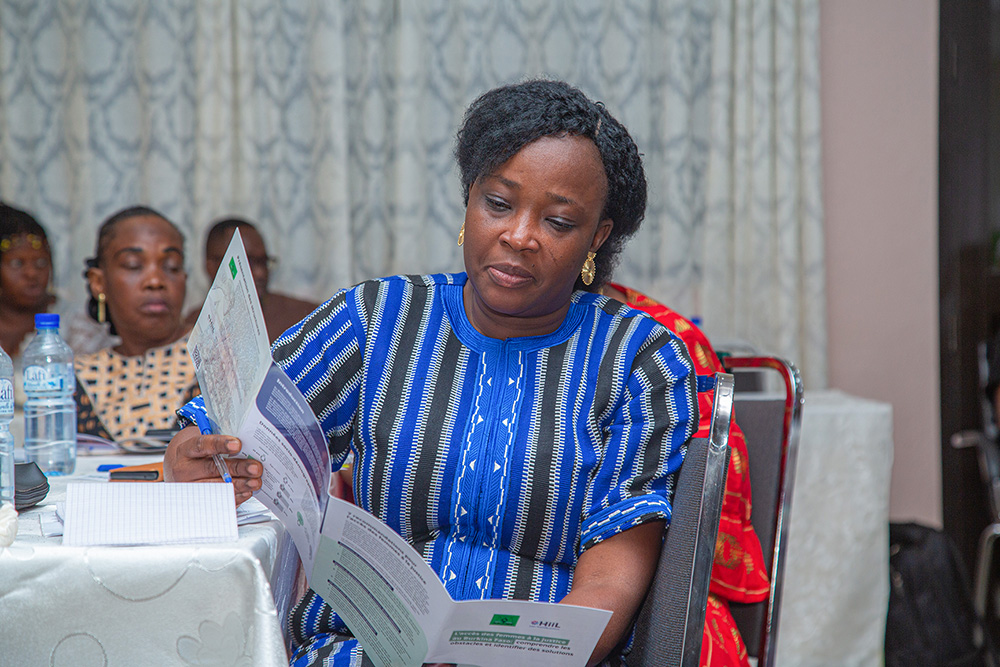
These obstacles are further outlined in a recent factsheet on women’s access to justice in Burkina Faso. Drawing on recent Justice Needs and Satisfaction survey data, the report illustrates that even when women are aware of their rights, asserting a claim to inherited land carries social risks such as retaliation or community banishment. This reality often forces women to choose between their safety and their rightful property.
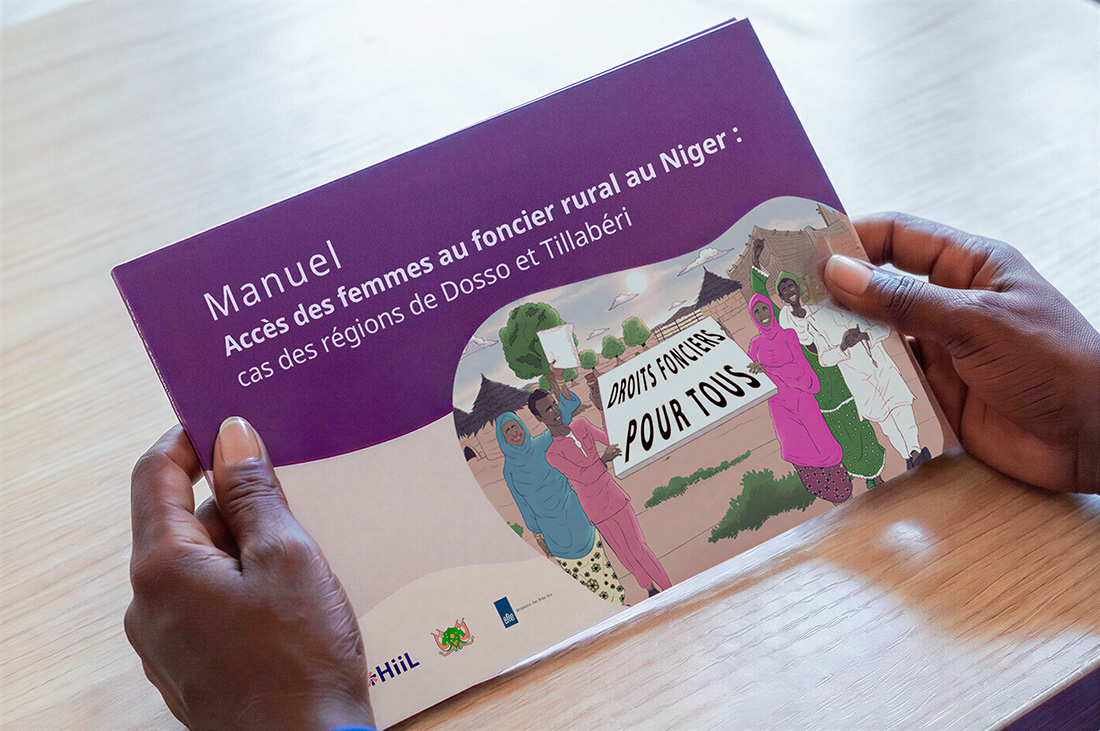
A way to close this justice gap is demonstrated in Dosso and Tillabéri State. HiiL has worked extensively on developing actionable land guidelines. These guidelines were created in close cooperation with local justice practitioners. They lay out concrete pathways that must be followed to increase women’s access to land. Some innovations include actively educating and informing women of their rights through translating and conveying information in an accessible and understandable format, as well as working to shift deeply ingrained community norms to be more inclusive towards women.
Bridging the justice gap for survivors of domestic violence
Another important area in which HiiL works is providing people-centred justice for survivors of domestic violence. Domestic violence strips women of their safety and often keeps them trapped in dangerous situations. To address this, we have developed people-centred approaches to domestic violence problems, designed and built from the experience of survivors.
In Uganda, we launched an in-depth investigation into what the wishes of domestic violence survivors are and what they want when seeking justice. The findings revealed that survivors don’t always look for punitive measures or drawn-out legal battles. Instead, they often want practical and peaceful solutions that secure their safety.
However, in Uganda, survivors face a series of systematic paradoxes. Within their communities, survivors are often well listened to and highly respected, yet they feel unsafe. Furthermore, while the formal justice system may default to punishment, survivors frequently want non-punitive measures and instead prefer pathways towards reconciliation or peaceful separation.
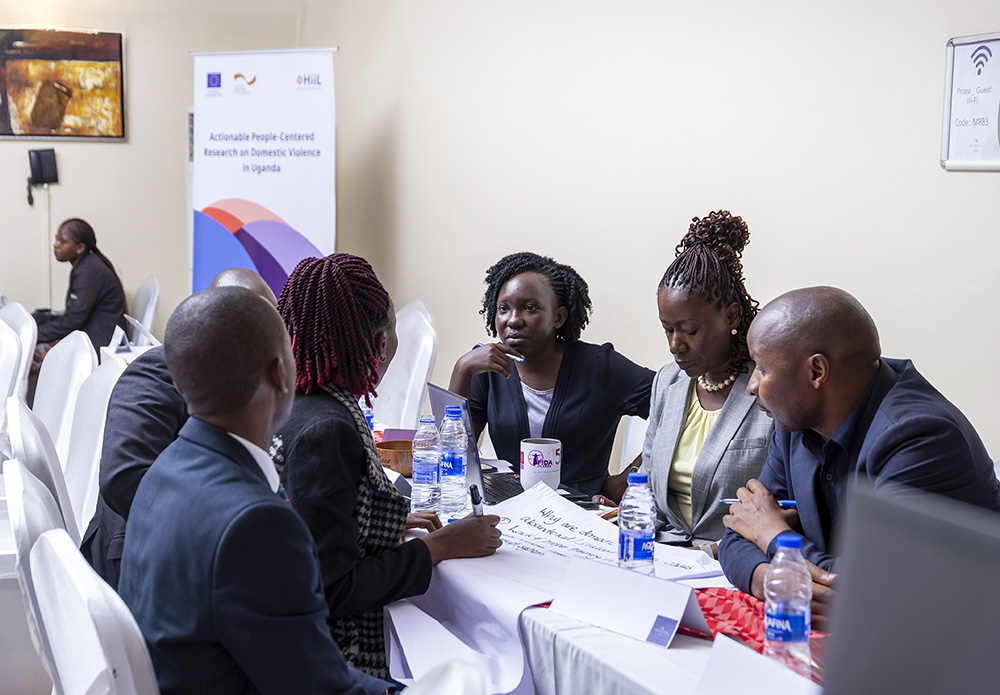
HiiL identified these paradoxes and subsequently engaged both informal and formal justice practitioners to look into the experiences of survivors and brainstorm concrete improvements to their daily operations which might increase the rate of successful resolution. We then translated these insights into a comprehensive report equipped with strategic recommendations for policymakers and justice practitioners.
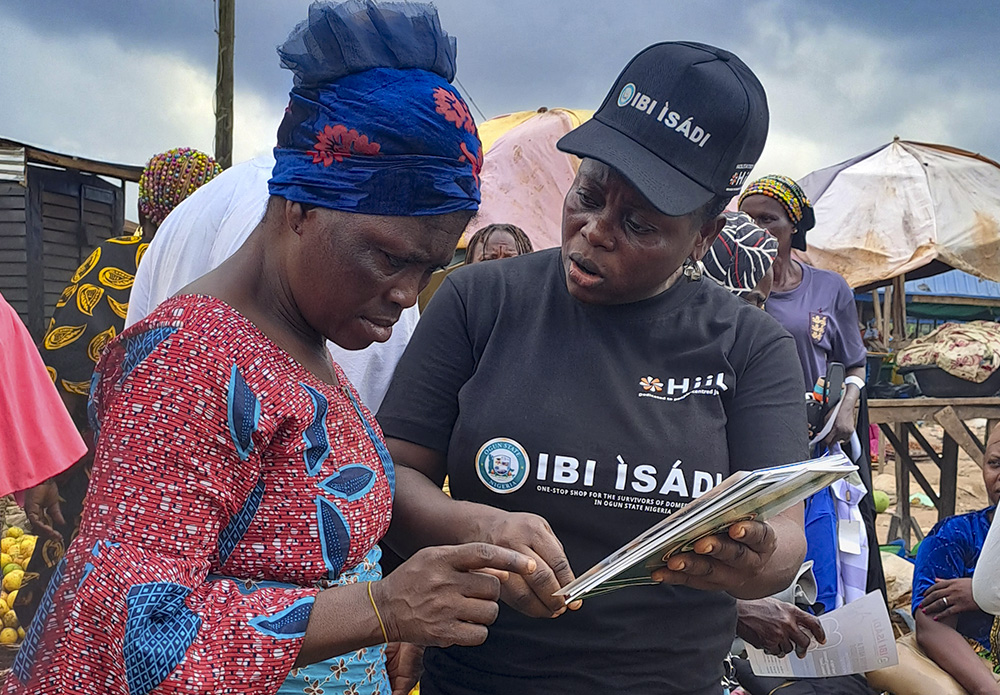
One of the key innovations to emerge from our work on domestic violence is how we promote institutional ownership. The way to achieve institutional ownership of cases of domestic violence is by creating ‘one-stop centres’ for victims, which we see successfully implemented in Ogun State, Nigeria. This centre guides survivors through the justice process, providing essential legal support under one roof.
Designing women-led community justice services
The insights gathered from our work on land rights and domestic violence point towards one thing: to achieve equal access to justice, institutions must adopt a women-centred approach. And a women-centred approach is most effective when it is women-led.
For this reason, we want to highlight our policy brief on designing women-led community justice innovations. Empowerment is the process in which women are not only passive recipients of justice innovations but rather take part in the designing and implementing of these innovations. Since women are more prone to systemic barriers than men in many aspects, such as education, financial independence, and the presence of patriarchal practices, justice innovations need to address these challenges and therefore be designed accordingly.
Designing women-led justice services involves training and empowering female community leaders and legal practitioners to act as primary points of contact for justice resolution. When a survivor of domestic violence or a woman facing eviction from her land seeks help, interacting with female justice practitioners dramatically increases trust. It creates a safe space where women feel seen without the fear of cultural stigma or dismissal.
Furthermore, women-led justice services act as powerful catalysts for broader systemic change. When women hold roles as respected justice providers within their community, it slowly shifts community norms that have previously excluded them. By equipping women with the tools and data to lead community justice initiatives, we ensure that the outcomes are effective.
The path forward
The International Day for Women and Girls of African Descent is a moment to celebrate progress; it is a stark reminder that more needs to be done. Achieving equal access to justice is impossible when we leave millions of women and girls to navigate the justice system, which wasn’t designed for them, by themselves. At HiiL, our work across Niger, Nigeria, and Uganda demonstrates that when women are equipped with legal awareness and accessible legal systems, they can thrive. Closing the gap is a collective responsibility. By investing in women-led justice, we ensure that equal access to justice becomes a reality.