By Maryam Abba, HiiL’s Nigeria Justice Transformation Operations Officer

What does it take for a promising justice innovation to survive beyond the pilot phase?
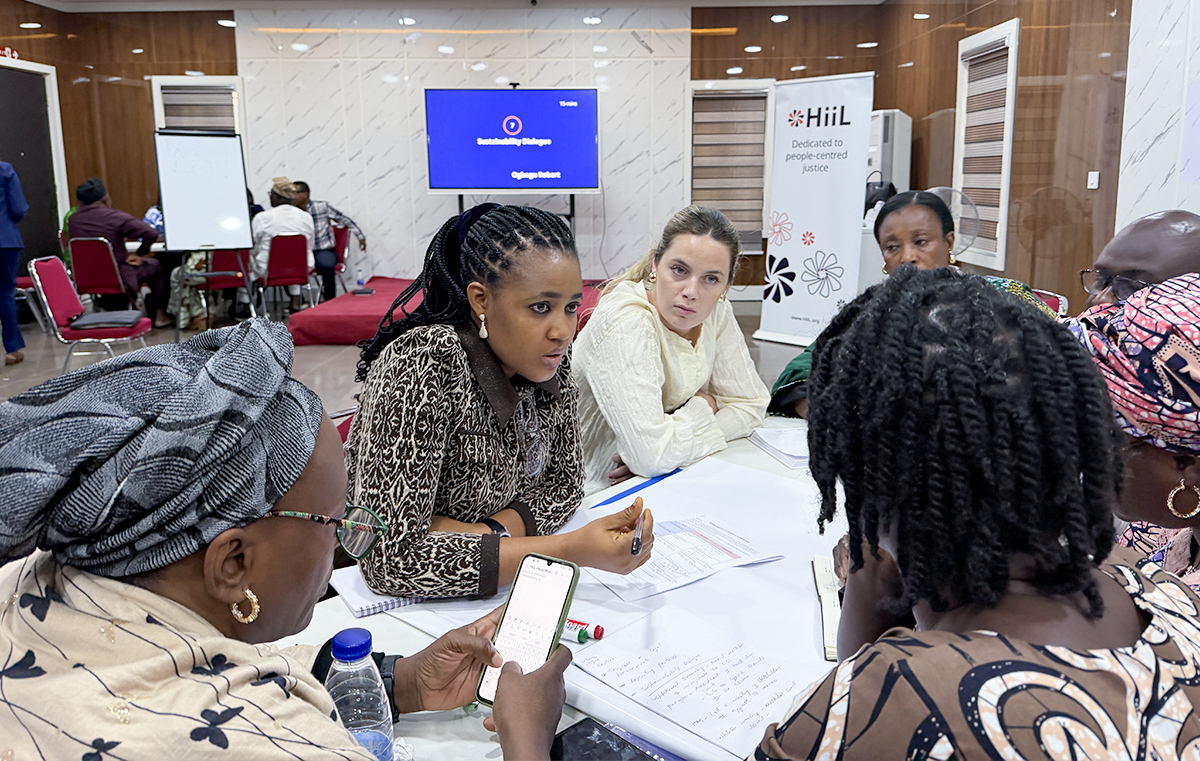
This question was at the heart of the Justice Innovation Lab (JIL), held on 9 July 2026, which brought together stakeholders from Kaduna, Imo, and Ogun States. Convened by HiiL, the meeting provided an important space for government officials, civil society organisations, traditional leaders, Steering Committee members, and pilot teams to reflect on their respective innovation journeys, review sustainability and transition plans, and learn from one another’s experiences.
The meeting doesn’t just mark the conclusion of the pilot phase. It represented an important moment of transition. The community justice centres move from testing promising ideas to strengthening local ownership, partnerships, governance structures, and the resources needed to sustain them.
The discussions demonstrated that while the three states have developed distinct justice models shaped by their unique contexts, they share a common ambition: to make justice more accessible, responsive, and centred on the everyday needs of people and communities.
A strength of the Justice Innovation Lab approach is that it does not assume that a single solution will work everywhere. This strength allows each state’s pilot to evolve in response to specific justice needs and community structures, and to adapt to different institutional realities. Bringing together the pilots to discuss their lessons learned allows them to draw from each other and avoid common pitfalls.
Ogun State: Bringing Essential Services Closer to Survivors
In Ogun State, Ibi-Isadi, meaning “a place of refuge,” was developed as a one-stop hub for survivors of gender-based violence. Implemented in partnership with the Ministry of Women Affairs and the Ministry of Justice and situated within a Primary Health Care Centre, the model is designed to bring essential support services closer to survivors and improve coordination among service providers.
As the pilot transitions into its next phase, important steps have already been taken towards institutional ownership. The Ministry of Women Affairs has appointed an Operational Head, and the State Bureau of Information Technology has assumed responsibility for the innovation’s digital components. Efforts are also underway to strengthen the infrastructure needed for effective service delivery, including securing solar power and reliable internet connectivity.
These developments highlight a critical lesson from the pilot journey: sustainability requires more than institutional endorsement. It requires institutions to take practical responsibility for the people, systems, infrastructure, and technology that keep an innovation functioning.
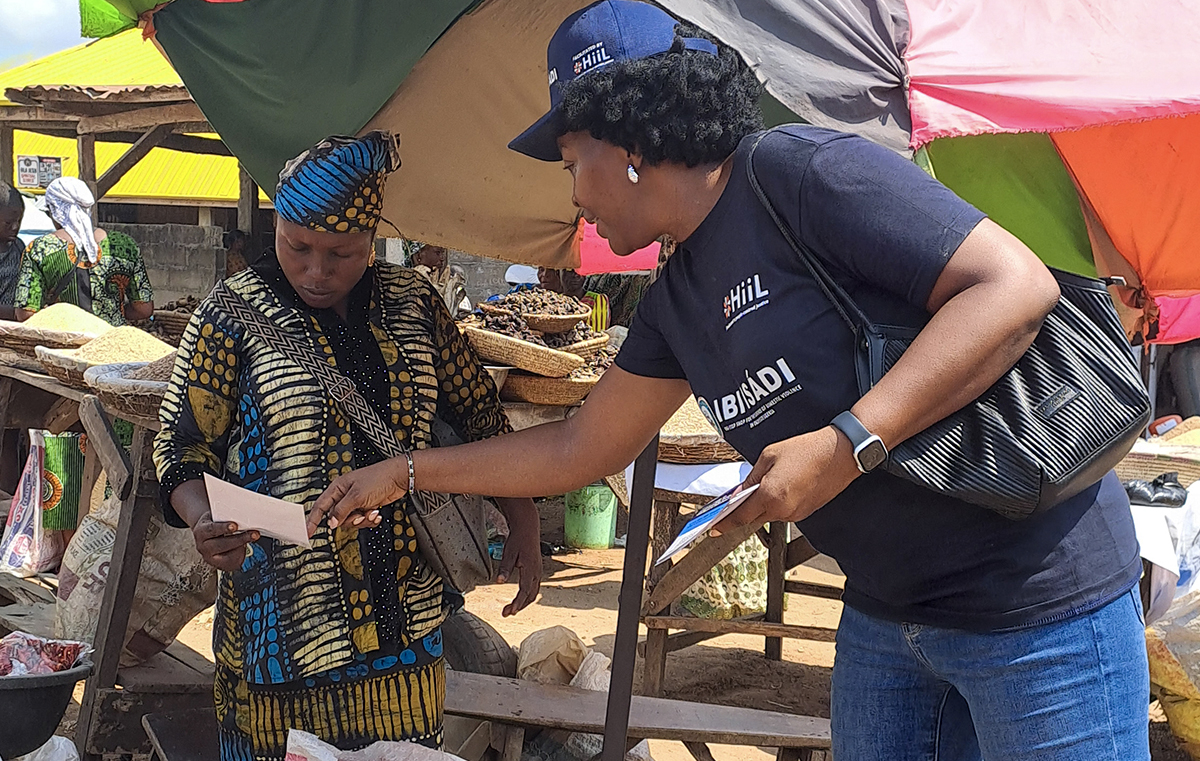
An Ibi-Isadi team member sharing gender-based violence awareness materials during the 16 Days of Activism outreach, Ogun State, Nigeria
Imo State: Building Community Ownership for Accessible Justice
In Imo State, the pilot journey is increasingly demonstrating the importance of community participation in sustaining justice innovation. The Community Justice Centre model is designed to bring justice services closer to communities and provide accessible pathways for resolving everyday justice problems. As the pilot moves beyond its initial implementation arrangements, plans are underway to strengthen government ownership and institutionalisation, with the Ministry of Justice and other government stakeholders playing an important role in discussions about its future.
At the same time, community ownership has emerged as one of the model’s strongest assets. Communities across the Njaba, Ehime Mbano, and Owerri Municipalities have demonstrated commitment to the initiative, with three communities stepping forward to provide office spaces for the Community Justice Centres. This contribution goes beyond providing physical buildings. It signals that communities see value in the model and are willing to invest their own resources to sustain it.
Discussions also highlighted the importance of strengthening the legal foundations of the Community Justice Centres. Continued advocacy towards embedding the centres within the appropriate legal framework, including discussions around the Imo Multi-Door Courthouse Law, was identified as an important pathway towards long-term institutionalisation.

Clinic day at the Community Justice Centre in Imo State, Nigeria
Kaduna State: Learning While Building
In Kaduna State, KAD-Adalci focuses on addressing gender-based violence and money-related disputes through accessible, community-level justice pathways.
The Community Justice Centre recognises the important role of traditional institutions in communities. It seeks to leverage the trusted authority of traditional rulers to refer cases, support follow-up, and facilitate dispute resolution, while strengthening collaboration with other actors across the justice sector.
As Kaduna is at an earlier stage of its pilot journey, the closure meeting created a particularly valuable opportunity for its stakeholders to learn from the experiences of Imo and Ogun States. Rather than waiting to encounter the same sustainability challenges, Kaduna stakeholders were able to ask questions, examine the decisions made by the other states, and consider how lessons from more advanced pilots could strengthen their own approach.
This exchange captured one of the most important values of the meeting: shared learning can help innovations move faster, avoid repeated mistakes, and make better-informed decisions.
A major highlight of the meeting was the quality of peer learning among the three state teams. Stakeholders did not simply present their achievements. They reviewed and challenged one another’s pilot designs and sustainability plans, asked difficult questions, shared practical experiences, and offered recommendations on institutional ownership, partnerships, governance, resources, and long-term sustainability.
The diversity of the three models made the conversation particularly valuable. Ogun brought lessons from integrating a one-stop service within government and public service structures. Imo demonstrated the importance of community ownership and the opportunities and challenges associated with transitioning from an initially non-government-led implementation arrangement towards stronger government institutionalisation. Kaduna, while still developing its model, brought the opportunity to apply these lessons early in its journey.
The meeting reinforced an important principle: there is no single pathway to sustainable people-centred justice. Sustainability must be shaped by context. What works in one state may need to be adapted in another. However, bringing together diverse experiences creates opportunities to identify common principles and strengthen collective learning.
Eight Pillars for Sustaining Justice Innovation
The transition discussions identified eight interconnected areas that will be critical to sustaining the justice models beyond direct project support. These eight pillars are:
1. Institutional Ownership: Long-term sustainability will require stronger ownership by relevant government institutions. Where full government ownership cannot happen immediately, appropriate transitional arrangements can help maintain momentum while longer-term institutional structures are developed.
2. Strong and Collaborative Governance: Stakeholders explored governance structures that distribute responsibility across relevant institutions. One proposal was a “tripod model” involving key ministries responsible for Justice, Women Affairs, and Human Affairs, with shared leadership arrangements designed to promote continuity and reduce dependence on a single institution or individual.
3. Diversified and Sustainable Financing: No justice innovation can function effectively without resources. Stakeholders therefore emphasised the importance of exploring multiple funding sources, including state and local government budgets, development partners, corporate social responsibility initiatives, public contributions, and other locally appropriate financing mechanisms. The broader lesson was clear: sustainable financing should not depend entirely on a single donor or funding stream.
4. Operational Capacity: The transition from pilot to sustainable service requires people with the skills and commitment to keep the models running. Discussions therefore considered ways to retain experienced personnel, transition willing staff into emerging institutional structures, and explore opportunities such as the Nigerian Jubilee Fellows Programme to strengthen human resource capacity.
5. Technical and Digital Sustainability: Digital tools and data systems have become important components of the justice models. Their sustainability will require more than developing a platform; institutions must also have the capacity to maintain, manage, and improve these systems. Discussions included opportunities to work with technical partners, such as Data Desk, to redevelop and upgrade platforms and databases while building administrative staff capacity to manage them over time.
6. Community Ownership: The experience of the Imo communities demonstrated that communities are not simply beneficiaries of justice innovation; they can also be active partners in sustaining it. The provision of office spaces for Community Justice Centres is a practical example of how local contributions can strengthen ownership and reduce dependence on external support.
7. Legal and Institutional Integration: For justice innovations to endure, they must increasingly become part of the systems within which they operate. This may require policy changes, formal government mandates, budget allocations, or legal reforms. In Imo State, for example, continued advocacy for the formal embedding of Community Justice Centres within the relevant legal framework remains an important part of the sustainability journey.
8. Continuous Learning and Adaptation: Sustainability does not mean that an innovation stops changing. Stakeholders emphasised the importance of clear standard operating procedures, regular analysis of data generated through digital systems, monthly learning discussions, and periodic reviews. These mechanisms can help identify emerging challenges, measure progress, and ensure that services continue to respond to the evolving justice needs of communities.
Turning Commitments into Action
An important part of the transition process was reviewing the Memoranda of Understanding for the three pilots. Stakeholders discussed the agreements and agreed that the MoUs would be finalised and signed during the respective state closure and handover ceremonies. The ceremonies are scheduled for 24 July 2026 in Imo State, 27 July 2026 in Ogun State, and 11 August 2026 in Kaduna State.
But institutional agreements alone are not enough to sustain innovation. Before the meeting concluded, participants made the transition personal. Each stakeholder signed a pledge outlining concrete actions they would take within the next 90 days to champion, advocate for, strengthen, or monitor the justice innovations.
This commitment underscored a central message from the meeting: sustainability is a shared responsibility. It depends on what institutions do after meetings end, how stakeholders use their influence, whether communities remain engaged, and whether commitments are translated into practical action.
Looking Ahead: From Projects to Lasting Justice Systems
The longer-term vision extends far beyond the closure of three pilots. The ambition is to strengthen recognised, accessible, and sustainable pathways through which people can resolve everyday justice problems closer to where they live. By improving local dispute resolution, strengthening referrals, coordinating services, and connecting community-level mechanisms with the wider justice system, these models have the potential to reduce pressure on formal courts while building greater public confidence in justice services.
The journey of Imo, Ogun, and Kaduna States also offers broader lessons for justice innovation.
Community ownership must be cultivated from the beginning. Government ownership must move from endorsement to practical responsibility. Technology must be accompanied by the capacity to maintain it. Sustainable financing must be diversified. And learning must continue long after a pilot officially ends.
Most importantly, the meeting demonstrated the value of creating spaces where innovators and institutions can learn from one another. As the three states move into their next phase, the focus is therefore not simply on closing pilots. It is about ensuring that the knowledge, partnerships, systems, and commitment developed through the Justice Innovation Lab continue to grow.
The transition from pilot to sustainability is rarely a straight path. It requires adaptation, institutional commitment, community trust, resources, and time. But the experiences shared on 9 July offered an encouraging reminder that sustainable people-centred justice is built when the people and institutions closest to justice problems take ownership of the solutions.
For Imo, Ogun, and Kaduna States, the next chapter is already beginning—one in which the success of these innovations will increasingly be measured not by the support they receive from a project, but by their ability to become locally owned, trusted, responsive, and lasting pathways to justice for the people they were created to serve.