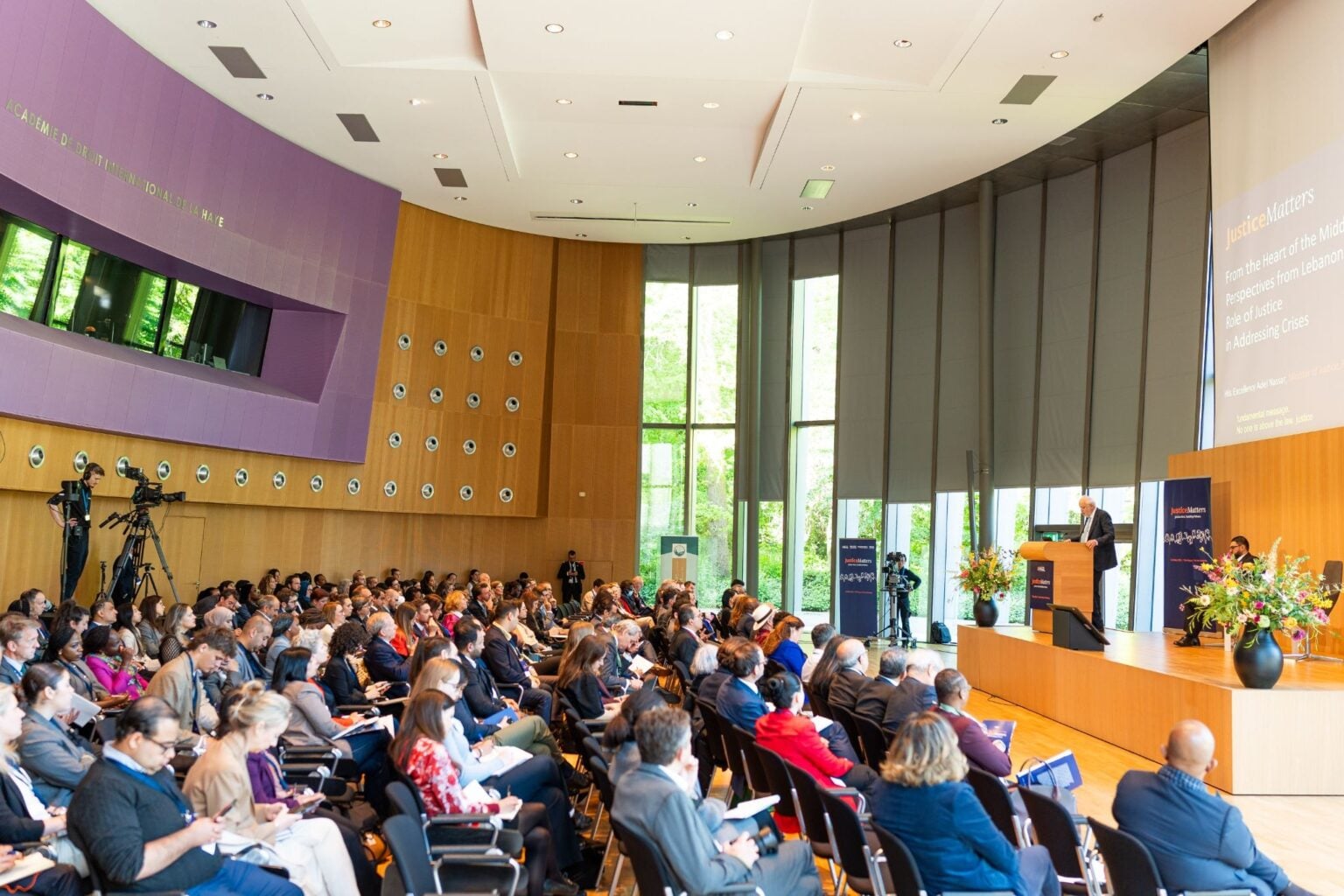
At a time when conflict, polarisation, and democratic backsliding continue to shape global politics, the 2026 Justice Matters Conference delivered a clear message: justice cannot wait until after stability is achieved. Instead, justice itself must become the foundation for lasting peace and resilient societies. Opening the conference, HiiL CEO Udo delivered a deeply personal reflection on his family’s survival during the Nigerian Civil War. His remarks set the tone for the day, emphasising that unresolved injustice does not simply disappear.
“Injustice is like a bad wound. You can put something on top of it and cover it. If you don’t deal with it, it will hollow you out from the inside.”
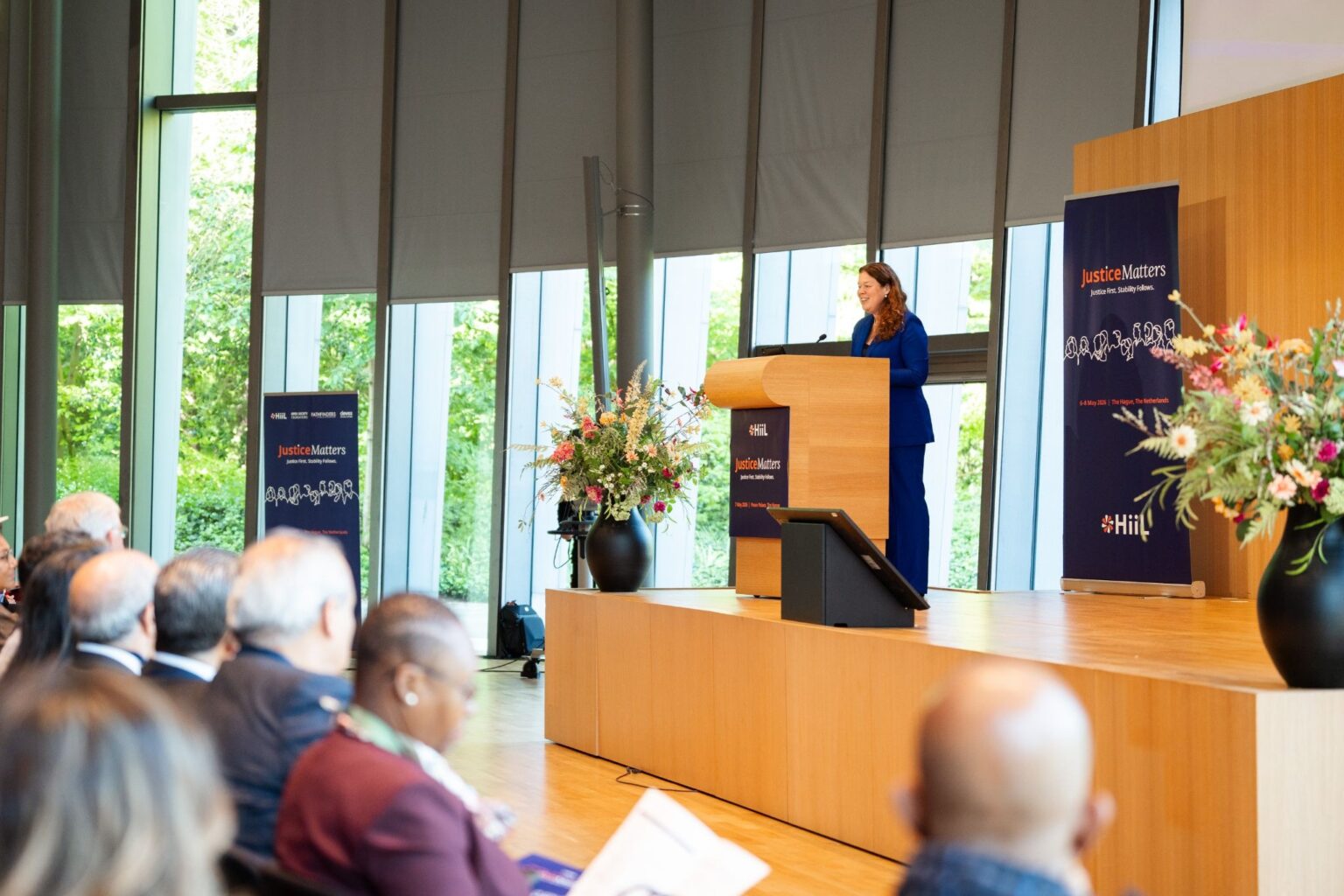
The conference theme, Justice First, Stability Follows, challenged long-standing assumptions in international development and security policy. Too often, justice systems are treated as secondary to military stabilisation or economic recovery. Speaker after speaker argued that this logic must be reversed. Pascalle Grotenhuis of the Dutch Ministry of Foreign Affairs stressed that justice is not merely a moral aspiration, but a practical requirement for development and legitimate governance. Mayor Jan van Zanen reinforced the importance of local institutions in rebuilding public trust. “Peace begins with justice, and justice begins close to home.”
Voices from the Middle East
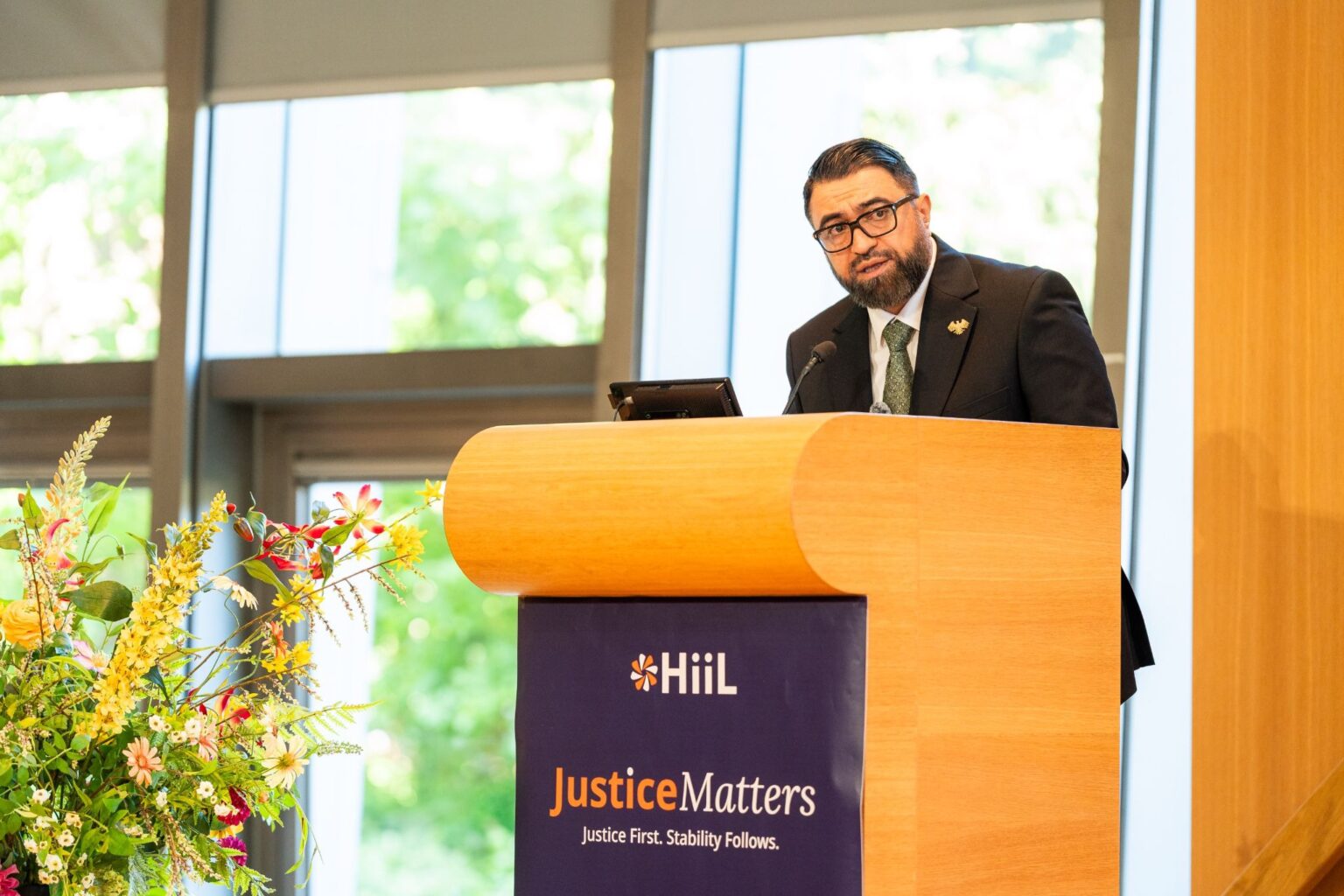
Some of the conference’s most powerful moments came from reflections on justice in the Middle East. His Excellency Mazhar al-Wais highlighted Syria’s ongoing shift toward a people-centred approach to justice, where justice is no longer treated as a political option, but as a foundational condition for the existence of the state itself. Reflecting on the conference theme, he noted that the message “Justice first, stability follows” captures a vision that Syria both believes in and is actively working to realise. He added that Syria’s experience shows that justice does not only precede stability, but must also continue to follow and sustain it.
Lebanese Minister of Justice Adel Nasser addressed the immense pressures facing Lebanon, from regional instability to the aftermath of the Beirut port explosion. His remarks reinforced a recurring theme throughout the conference: impunity does not preserve peace, it undermines it.
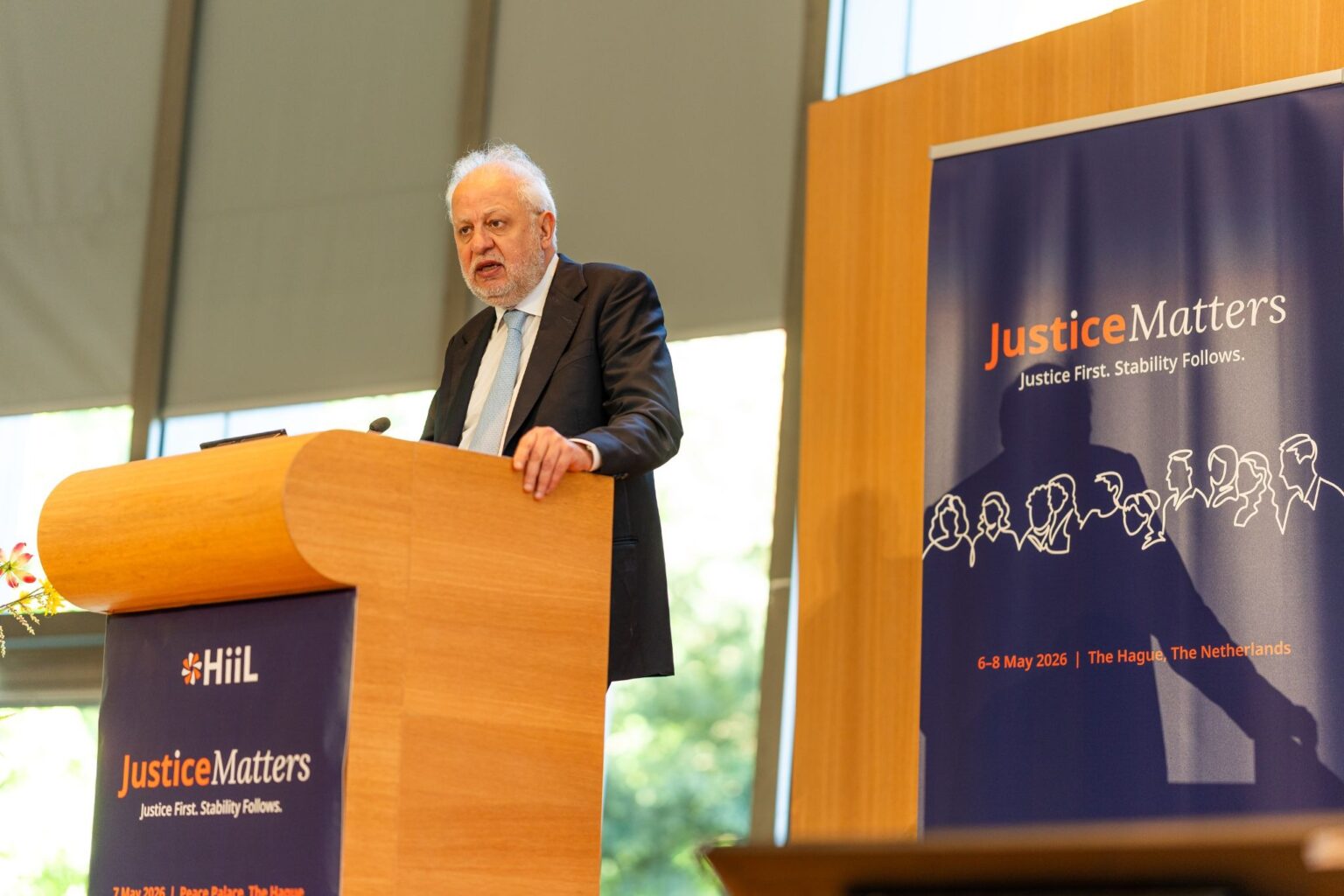
“Stability built on impunity is not stability. It is only a delay.” Discussions moved beyond theory and into the realities faced by fragile states. A panel on conflict and institutional fragility examined how weak justice systems fuel cycles of violence and distrust. Speakers from government, academia, and the judiciary emphasised that justice mechanisms must be embedded into stabilisation efforts from the beginning, not introduced afterwards.
Judge Alexandra Sandoval Mantilla shared lessons from Colombia’s transitional justice process, where restorative approaches allow perpetrators to avoid prison sentences if they fully acknowledge their crimes and engage directly with victims. While controversial and deeply complex, the model seeks to rebuild fractured communities rather than rely solely on punishment.
Restorative Justice and Human Dignity
The emotional centrepiece of the conference came with the keynote address by Albie Sachs, whose reflections on restorative justice and forgiveness captivated the audience. Drawing on the African philosophy of ubuntu, Sachs spoke about the interconnectedness of humanity.

“I’m a person because you’re a person. I can’t separate my humanity from an acknowledgement of your humanity.”
Sachs recounted surviving solitary confinement during apartheid and later meeting the man responsible for the bombing that cost him his arm. His testimony became a powerful reminder that justice is not only about institutions and legal frameworks, but also about dignity, healing, and human connection.
Bridging the Gap Between Law and Lived Experience
Another major focus of the conference was the widening gap between legal reforms on paper and the everyday realities of ordinary people. During the launch of a new HiiL and Mo Ibrahim Foundation policy brief on the rule of law in Africa, speakers highlighted the immense social and economic costs of weak justice systems. Although many countries have improved formal legal frameworks, public trust in access to justice continues to decline. For small businesses, the consequences are especially severe. An estimated 80% of justice problems faced by Micro, Small, and Medium Enterprises remain unresolved, limiting economic opportunity and growth across the continent.
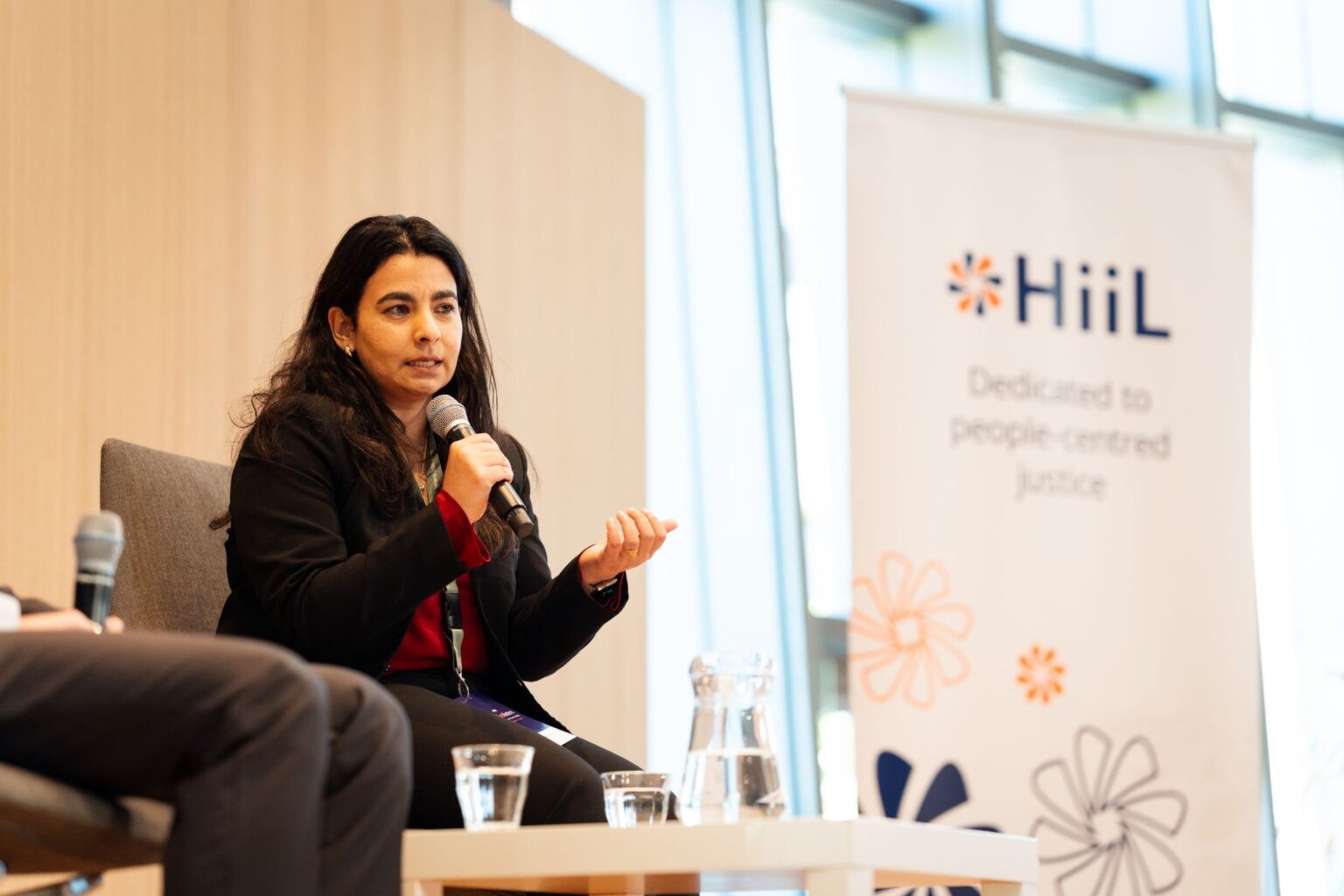
The conference also highlighted practical examples of people-centred justice already making a measurable impact. In Kenya, communities affected by the 2007 post-election violence created local accountability mechanisms after formal courts failed to deliver meaningful justice. Victims and perpetrators engaged directly, enabling stolen property to be returned and damaged relationships to begin healing. In Somalia, Alternative Dispute Resolution centres supported by local actors are helping resolve clan and land disputes before they escalate into violence. Women mediators are increasingly being integrated into these systems, strengthening both inclusion and protection for marginalised groups. Adam-Shirwa Jama from IDLO summarised the spirit of the discussion succinctly: “Stop waiting for stability to deliver justice. We need to flip it. Justice is stability.”
Funding Justice as Essential Infrastructure
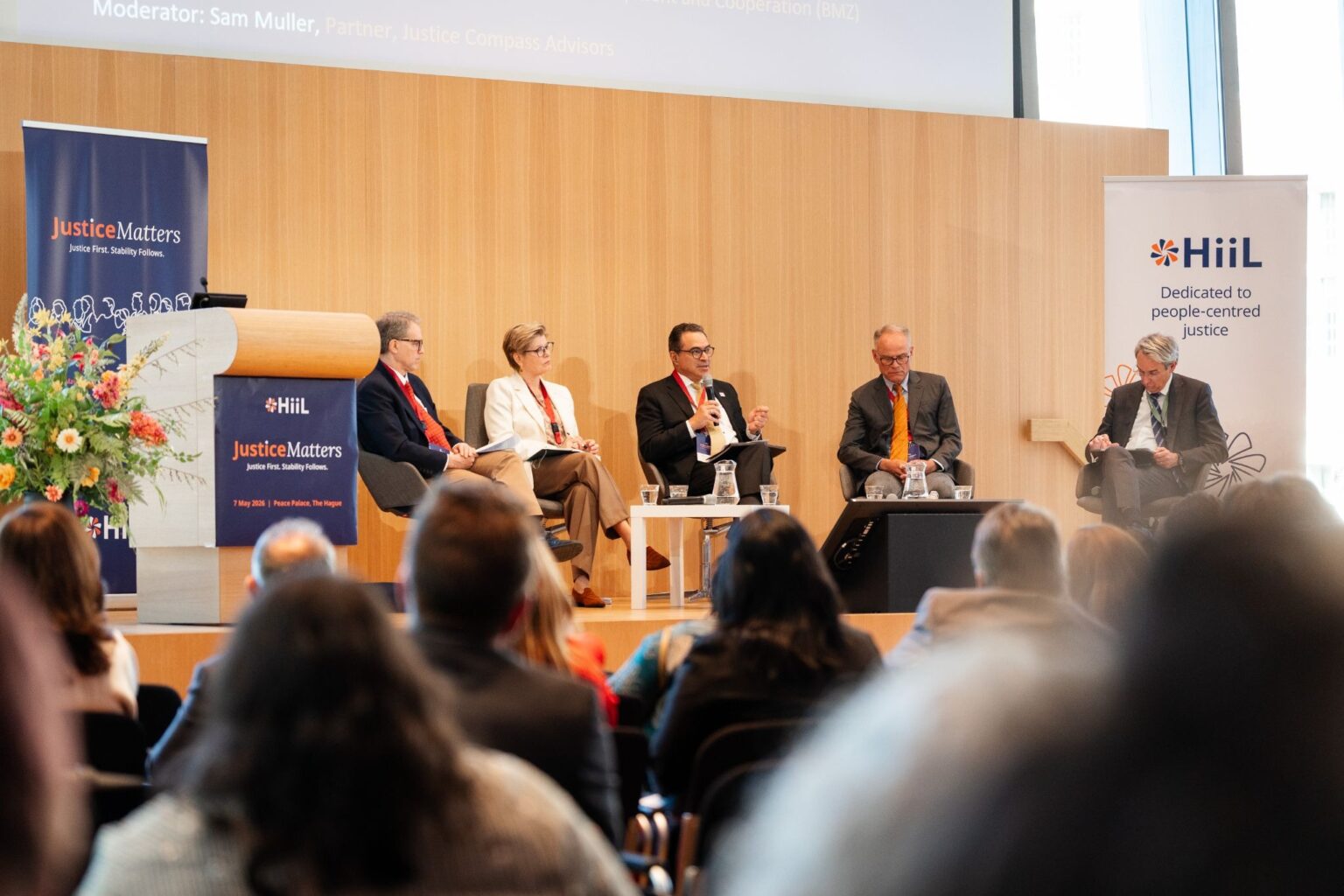
The conference concluded with discussions on one of the sector’s most urgent challenges: funding. Participants repeatedly stressed that justice remains chronically underfunded despite its central role in democracy, economic development, and peacebuilding. Speakers called on governments, donors, and the private sector to stop treating justice as a peripheral issue and instead recognise it as essential public infrastructure. From strategic litigation to community mediation programs, investments in justice systems were framed not as optional expenditures, but as safeguards against future instability and authoritarianism.
The conference closed with a call from HiiL and its partners to move beyond rhetoric and build what one speaker described as an “army of doers.” Across every session, one idea remained constant: justice must become more accessible, more local, and more grounded in the daily realities of the people it is meant to serve. As attendees departed The Hague, the message was unmistakable: sustainable peace cannot exist without justice, and the future of stability depends on the courage to invest in it now.
Explore photos from the conference