Employment-related disputes have an important influence on careers, livelihoods, social cohesion, and economic activity. Access to employment justice plays a key role in strengthening trust in public institutions and supporting balanced labour relations. In Tunisia, employment-related issues are among the most common justice needs, highlighting the importance of effective and accessible pathways for resolution.
HiiL’s research paper, “Innovating Employment Justice in Tunisia: A People-centred Justice Design Case Study,” explores the design and testing of a practical solution developed to respond to the needs and expectations of justice users. Using a case study methodology, the research documents the ideation, prototyping, and piloting phases of a solution developed with both employees and employers in mind.
The study addresses three core questions:
- What does people-centred justice look like in practice?
- How do designers, practitioners, judicial actors, and public institutions work together to respond to users’ needs?
- What value can justice processes deliver when they are shaped around the experiences of their users?
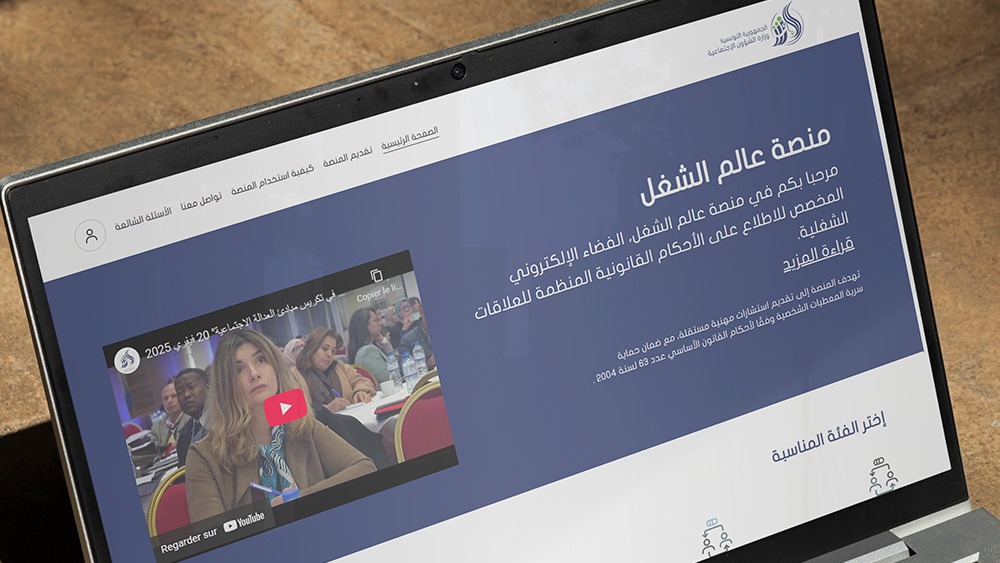
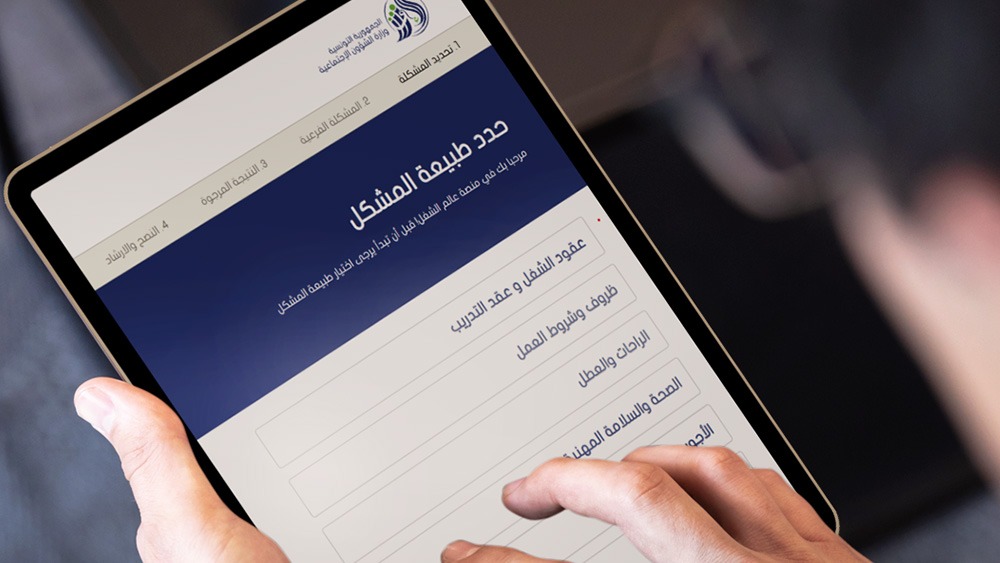
The case study follows the development of the Employment Justice Platform (EJP), a web-based service designed to help employees and employers better understand their legal situation and explore options for resolving disputes in a proactive and accessible manner.
Understanding the Employment Justice Landscape
Employment disputes are among the most frequently encountered legal issues in Tunisia. At the same time, many individuals and businesses face practical barriers when seeking guidance or resolution. These challenges underline the importance of accessible legal information, early support mechanisms, and clear pathways within the existing justice framework.
Employment law covers a wide range of rules and sector-specific agreements, which can make it difficult for non-specialists to navigate. As a result, some users delay or avoid engaging with available mechanisms. In addition, perceptions related to information asymmetry and resource availability can influence how employees and employers approach dispute resolution.
Judicial procedures also require time and formal steps, which may not always align with the immediate needs of justice users. While legal representation is not mandatory, navigating procedures independently can be demanding. These factors together highlight opportunities for complementary services that support early guidance and informed decision-making.
People-Centred Justice: A Practical Approach
The Employment Justice Platform was developed within HiiL’s Justice Innovation Lab using a user-centred design methodology. Rather than focusing on legal reform, the solution concentrates on how individuals experience and interact with justice services. Through a structured set of questions, the platform helps users clarify their situation and access relevant legal information presented in clear and practical terms.
A central feature of the platform is its anchoring within the Labour Inspectorate, the public authority mandated to prevent and address employment disputes. The EJP increases the visibility of this role and supports earlier engagement between users and public services, encouraging timely and constructive resolution pathways.

Caption: Justice Innovation Lab workshop
Built Through Collaboration with Key Stakeholders
One of the study’s main findings is the value of early and inclusive stakeholder engagement. Judges, lawyers, labour inspectors, social workers, technologists, and private-sector actors participated throughout the design, prototyping, and piloting phases. This collaborative process helped ensure that the solution reflected real user needs and aligned with institutional practices.
Working with user-centred design methods enabled participants to develop prototypes focused on improving how justice processes are understood and experienced. Over time, this approach encouraged a shared view of justice not only as a legal framework, but also as a service that should be accessible, clear, and responsive to users.
Creating Value Across the System
The report highlights the benefits of a people-centred approach at multiple levels:
- For employees, the platform offers clearer information, earlier guidance, and accessible pathways to resolve disputes.
- For employers, it provides a structured and discreet way to address employment issues and clarify obligations.
- For the justice system, it supports early resolution and contributes to more efficient use of judicial and administrative resources.
The Path Forward
As of June 2025, the Employment Justice Platform will be fully integrated into government infrastructure and managed by the Labour Inspectorate. This transition marks the evolution of the platform from a pilot initiative into a public service embedded within the existing justice system.
The case study illustrates that strengthening access to justice can begin with practical improvements in how systems respond to users’ needs. By focusing on collaboration, user experience, and institutional ownership, people-centred justice approaches can contribute meaningfully to more accessible and responsive justice services.